Work examples
A snapshot of AIM's work across Western Canada and the Prairies - roof anchors, guardrails, bird netting, fall protection systems, equipment inspections, difficult access, and industrial and remote jobs.
Cable-crane light install, captured live.
High-mast lighting installed on a cable-crane system. Rope access lets the crew rig, lift, and land fixtures in places no boom will ever reach.
Light removal on rope. No scaffolding, no lift.
Two ropes, the right rigging, and a controlled descent. Aging fixtures decommissioned with zero disruption to the operations below.
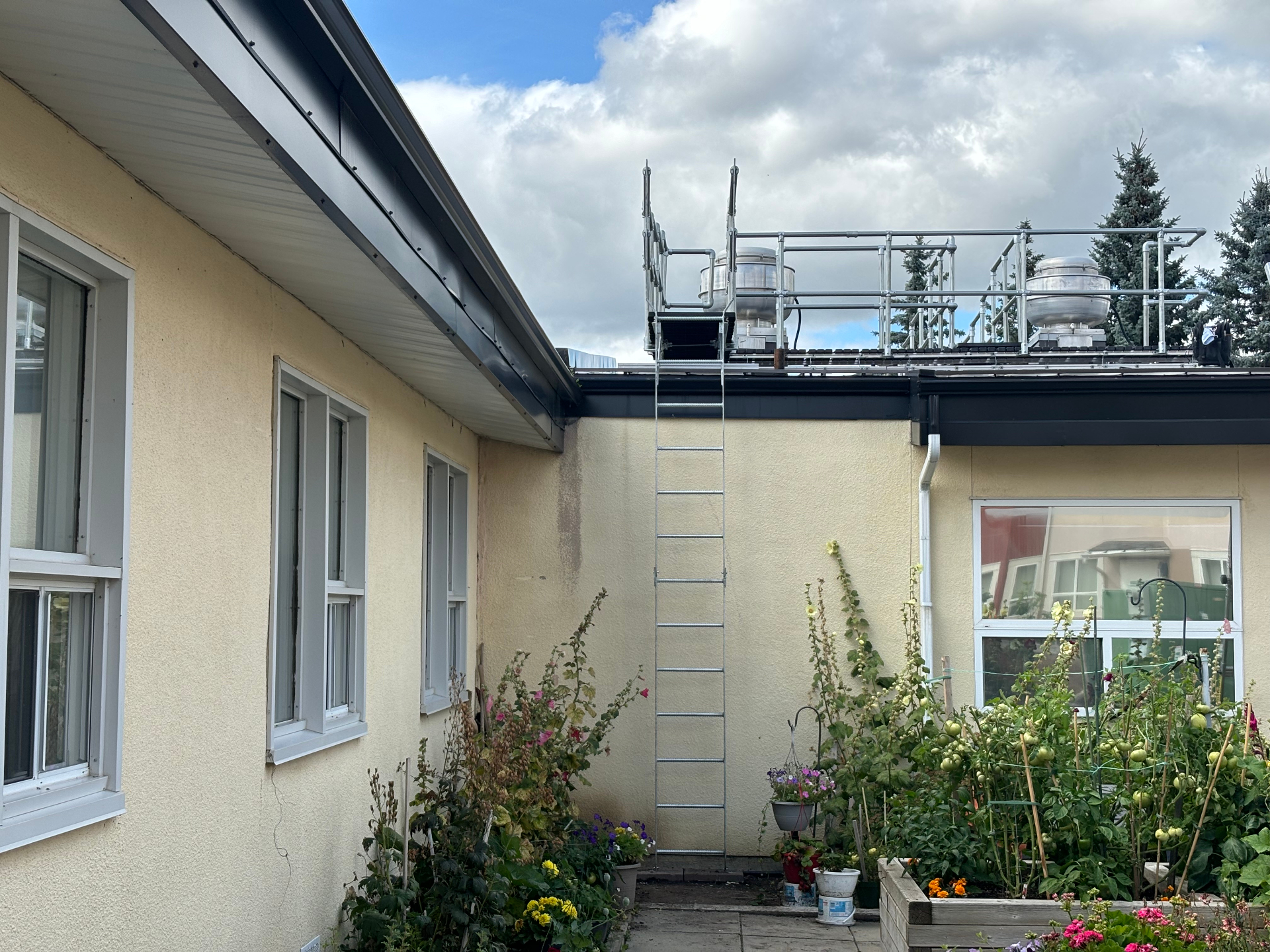
Custom-built stairs and walkways for safe rooftop access.
Where crews need to cross levels, step over services, and reach equipment safely, AIM builds protected rooftop routes with stairs, guardrails, and walkway platforms sized to the site.
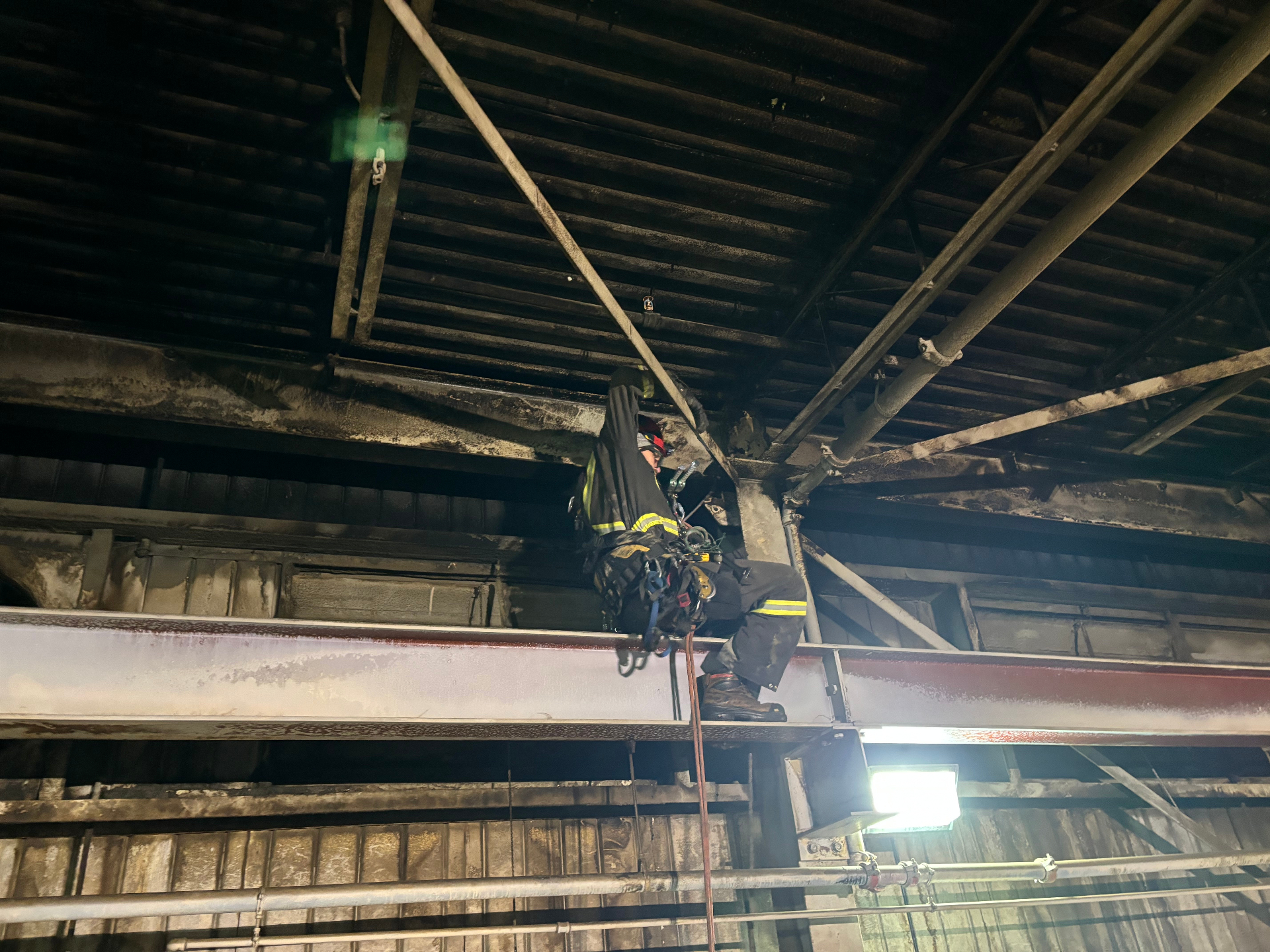
Sprinkler head replacement in live industrial facilities.
Rope access crews reach overhead sprinkler heads tucked between beams, ducting, and process equipment - swapping fused or expired heads without scaffold, lifts, or shutting the floor down.
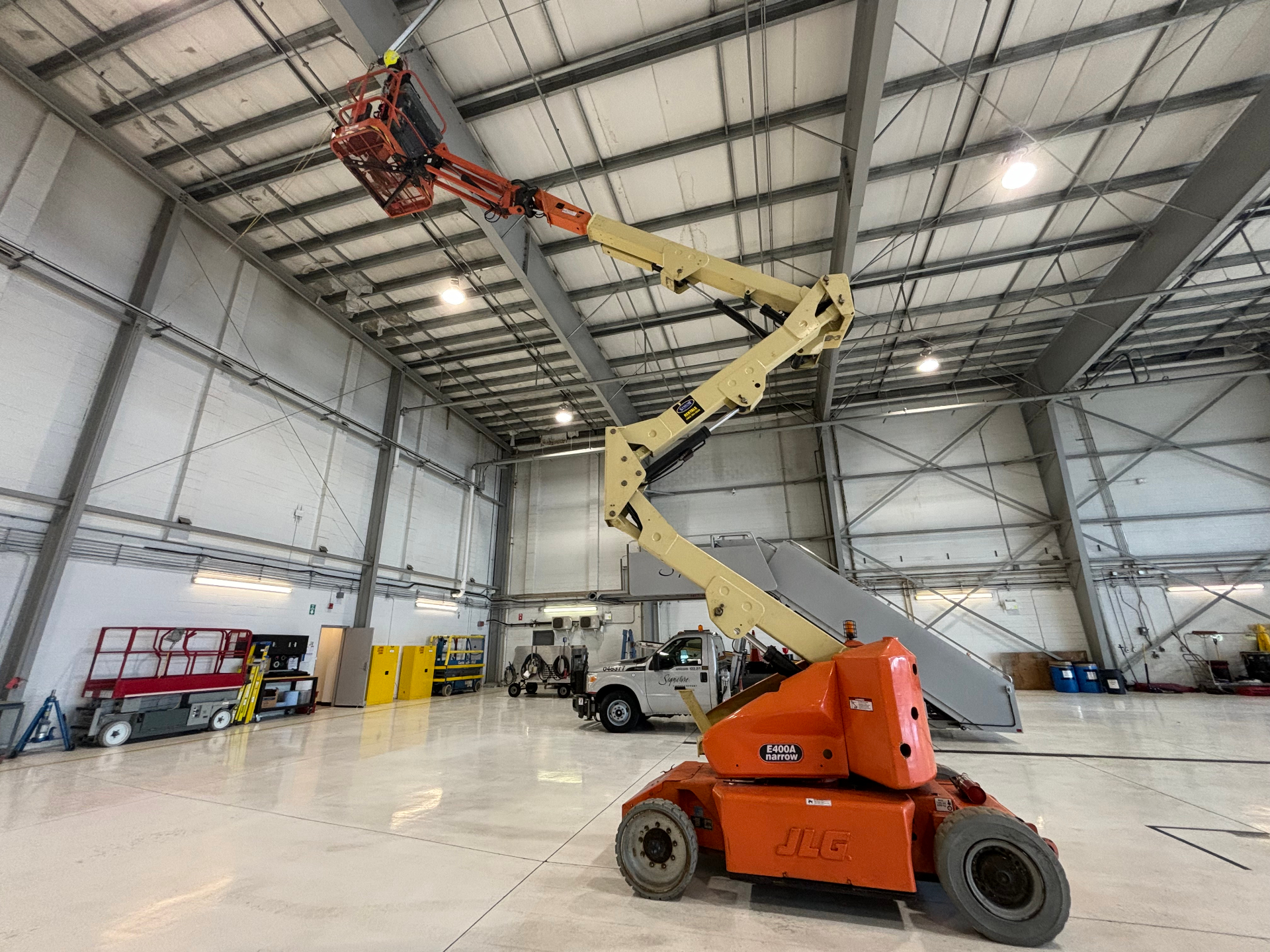
Load testing and inspection of horizontal lifeline systems.
Boom lift access lets AIM crews reach horizontal lifelines running high under roof decks and steel frames - performing annual load tests, tension checks, and component inspection without scaffolding or plant shutdown.
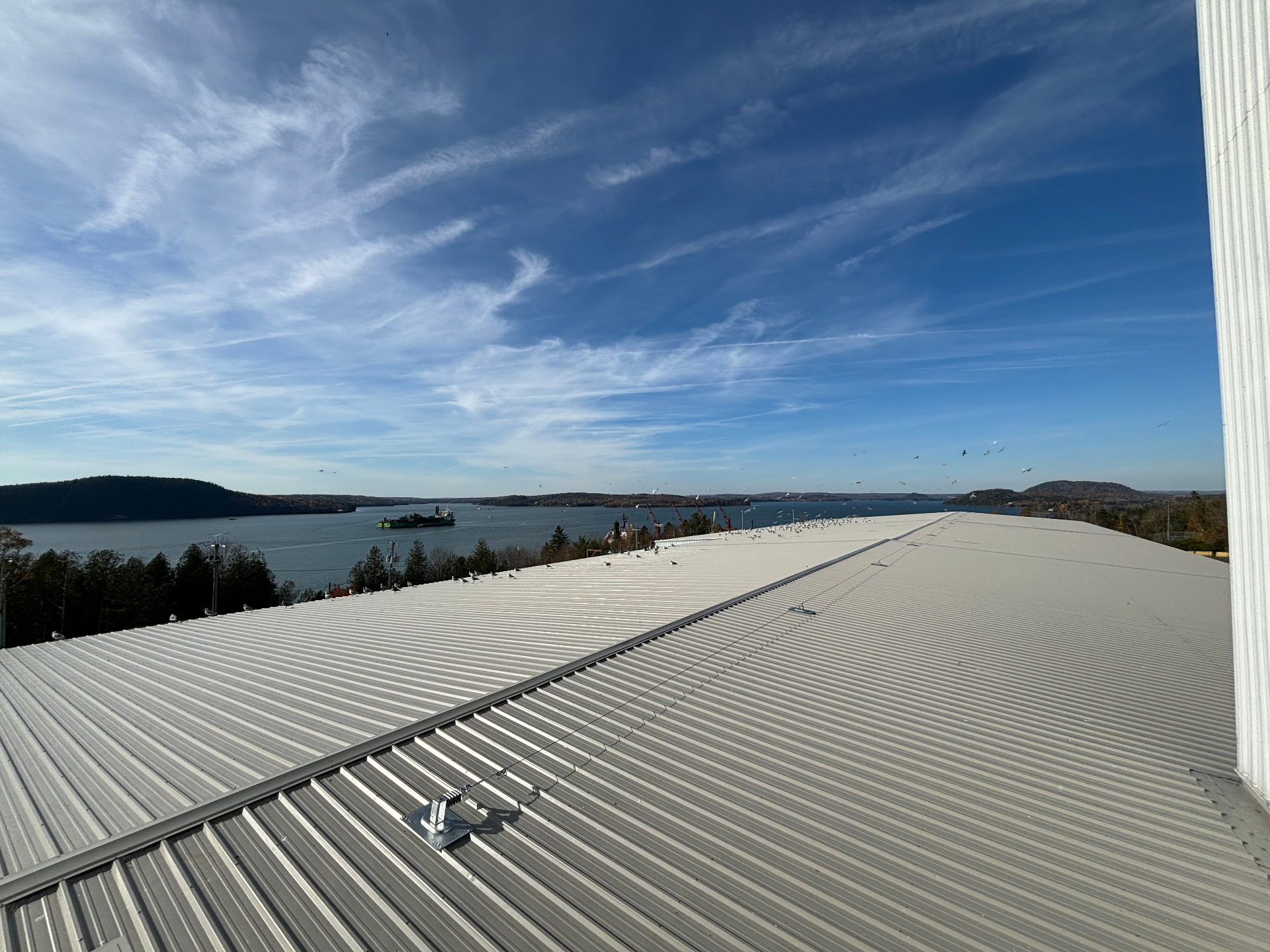
Long-run rooftop lifelines installed for full-roof access.
Standing-seam and plate-mounted horizontal lifeline systems laid out across large roof spans, with end terminations, energy absorbers, and intermediate supports positioned to keep crews protected as they move from one service zone to the next.
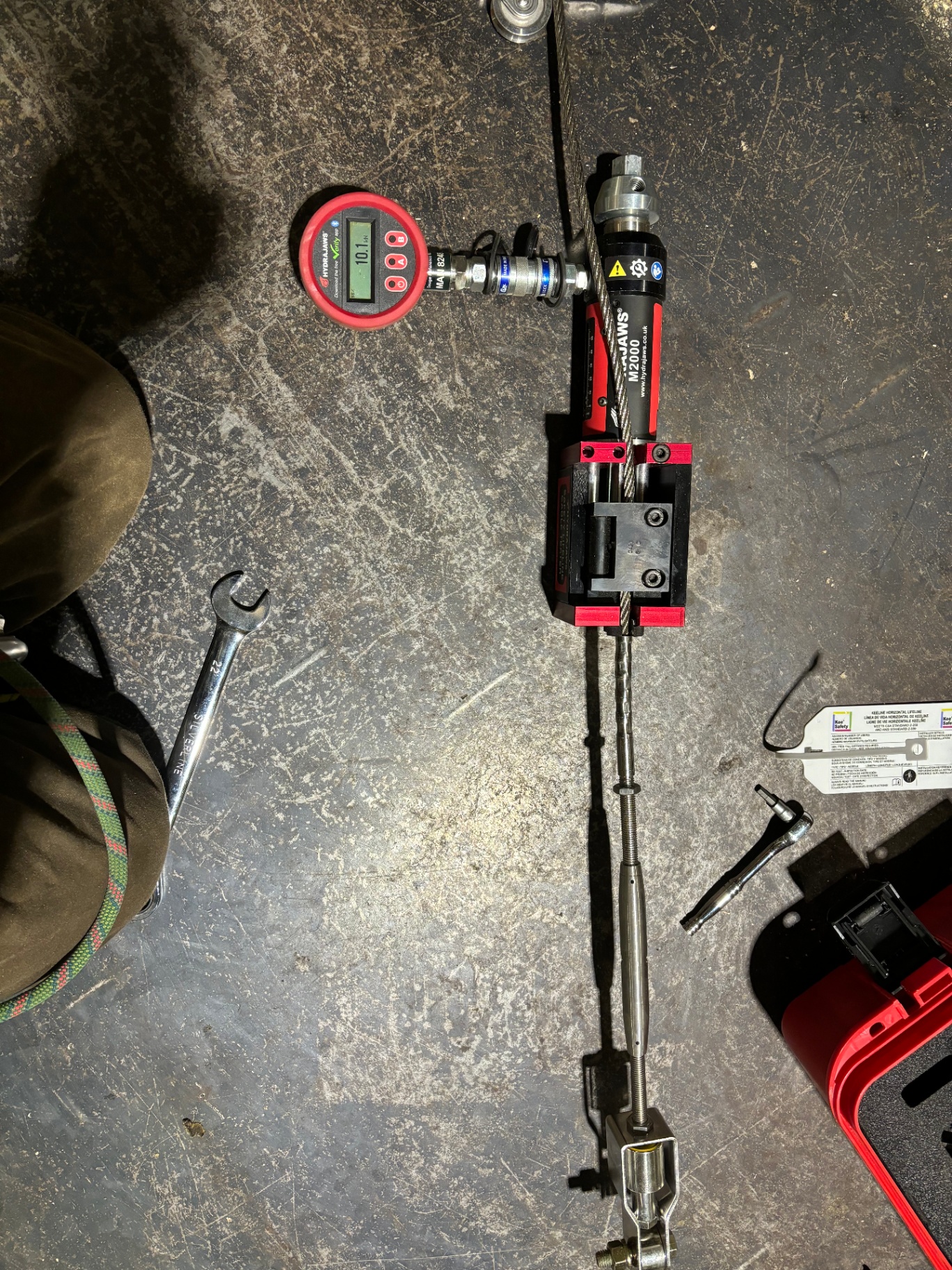
Pull-testing every swaged termination to certified load.
Each swaged fitting on a horizontal lifeline - turnbuckles, eye terminations, and intermediate anchors - is pulled to its specified proof load with a calibrated Hydrajaws M2000 rig. Readings are logged for the inspection report so every termination is verified, not assumed.
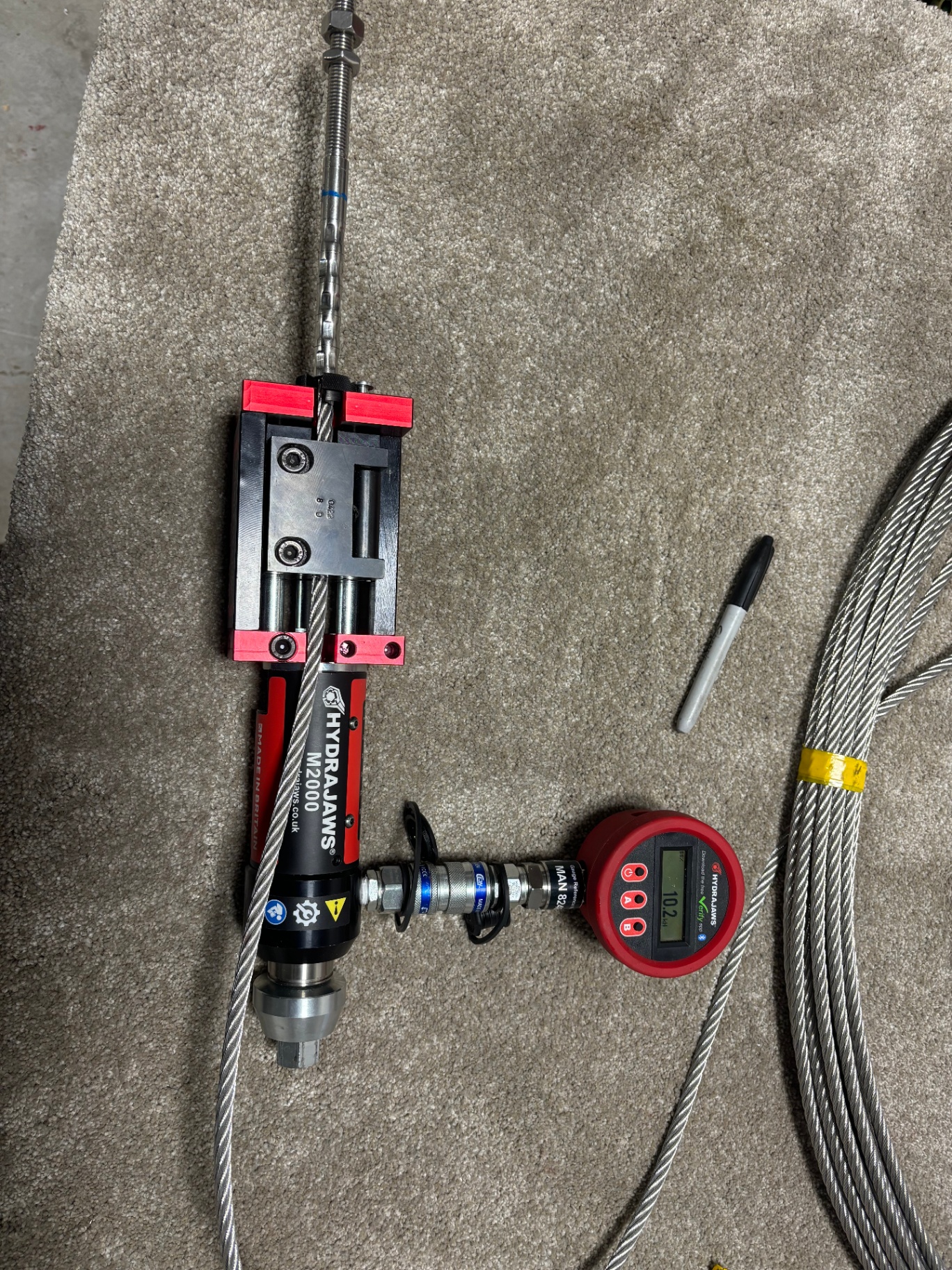
Shop-tested before it ever goes on a roof.
Terminations are proof-loaded in the workshop with the Hydrajaws M2000 and digital gauge before the cable leaves the shop - confirming the swage holds to spec under controlled conditions, so site work focuses on installation, not troubleshooting.
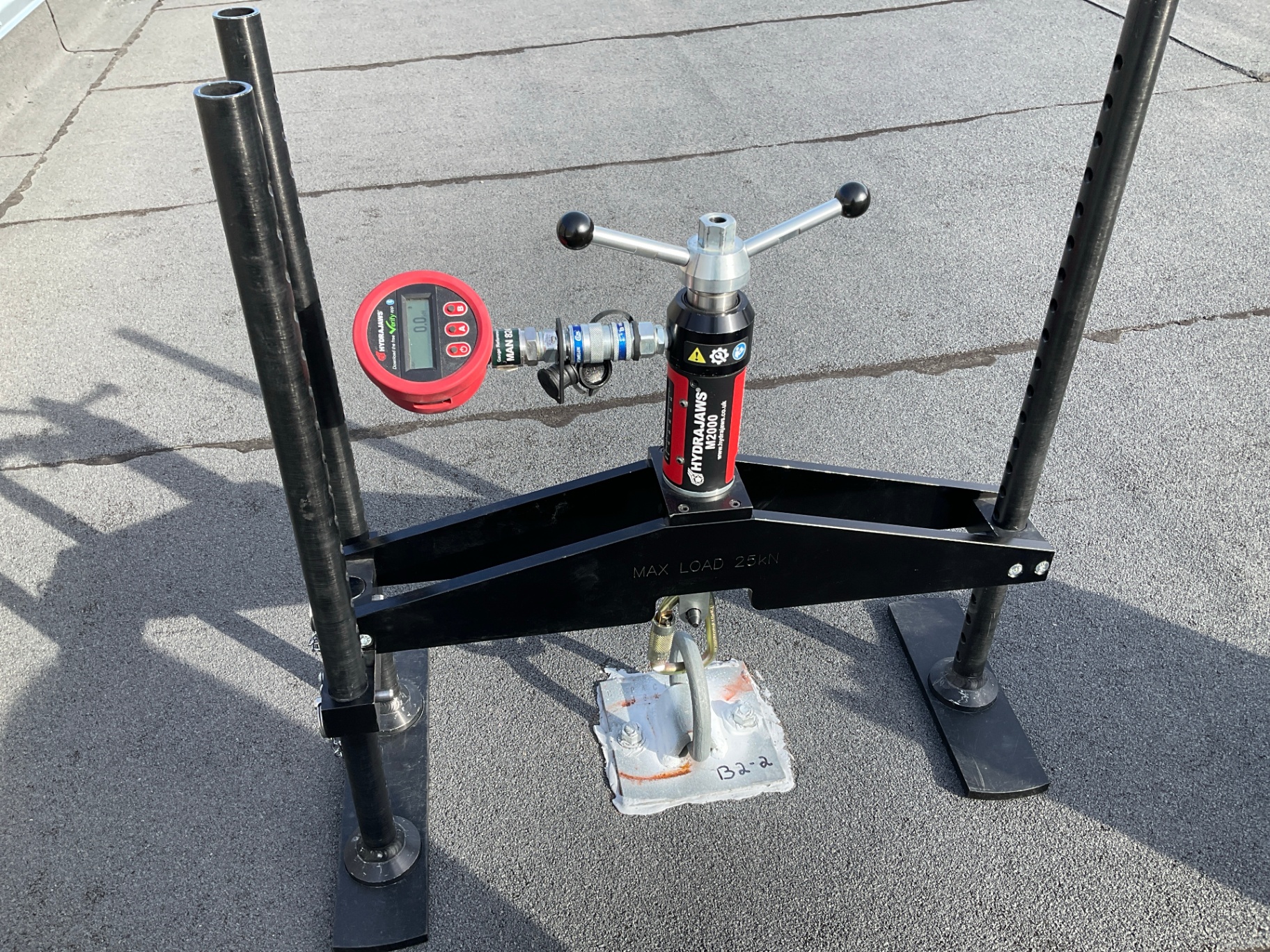
Single-point anchors proof-loaded on the roof before turnover.
Each anchor is pull tested with a calibrated Hydrajaws rig to verify the installed assembly and substrate take the required proof load, with readings logged for the inspection record and handover package.
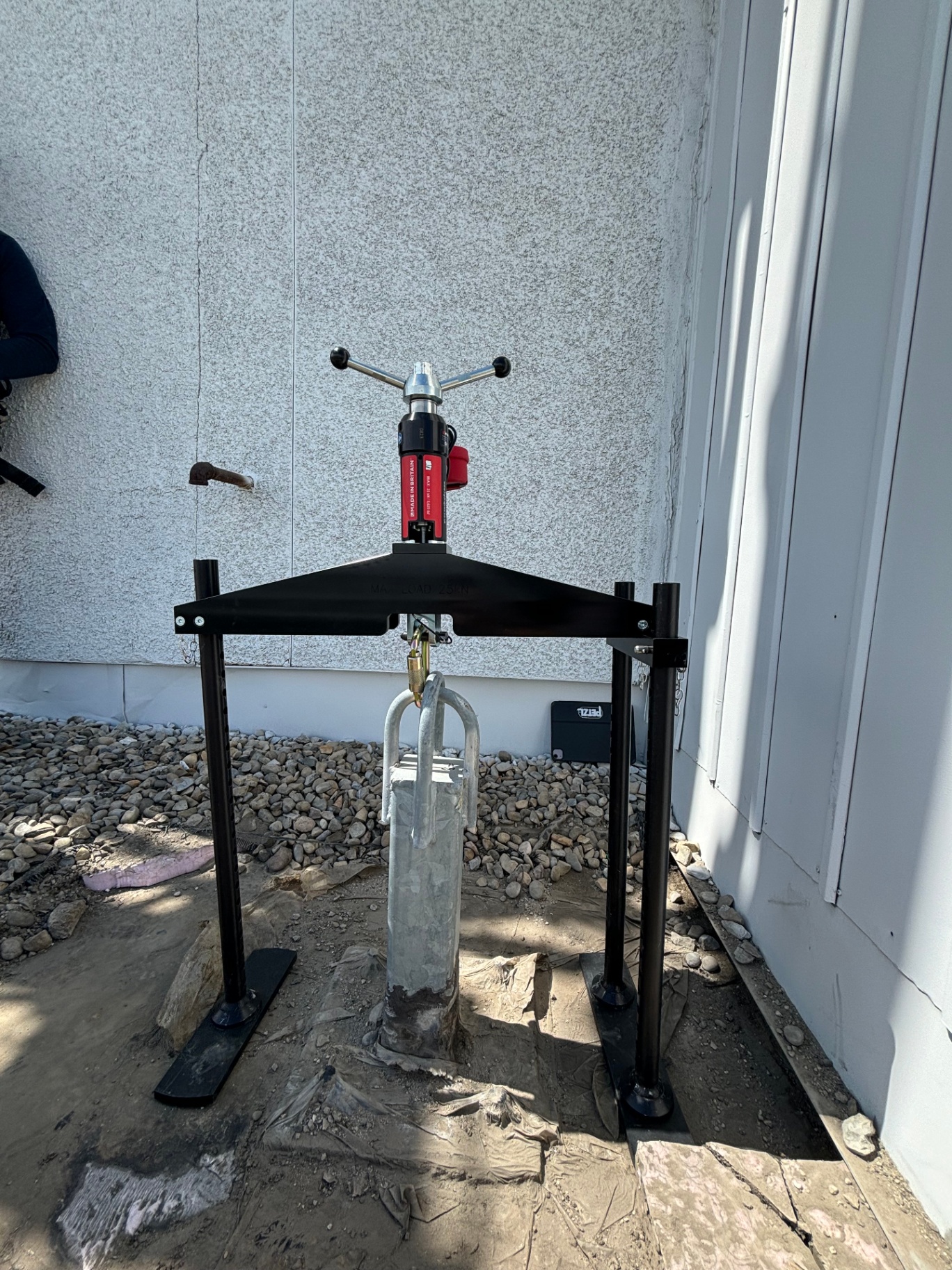
Calibrated proof loads on every anchor type - roof, overhead, or wall.
Whether it's a rooftop D-ring, an overhead beam fitting, or a wall-mounted eye, each anchor is loaded with a calibrated Hydrajaws rig and the reading logged against the manufacturer's spec for the inspection record.
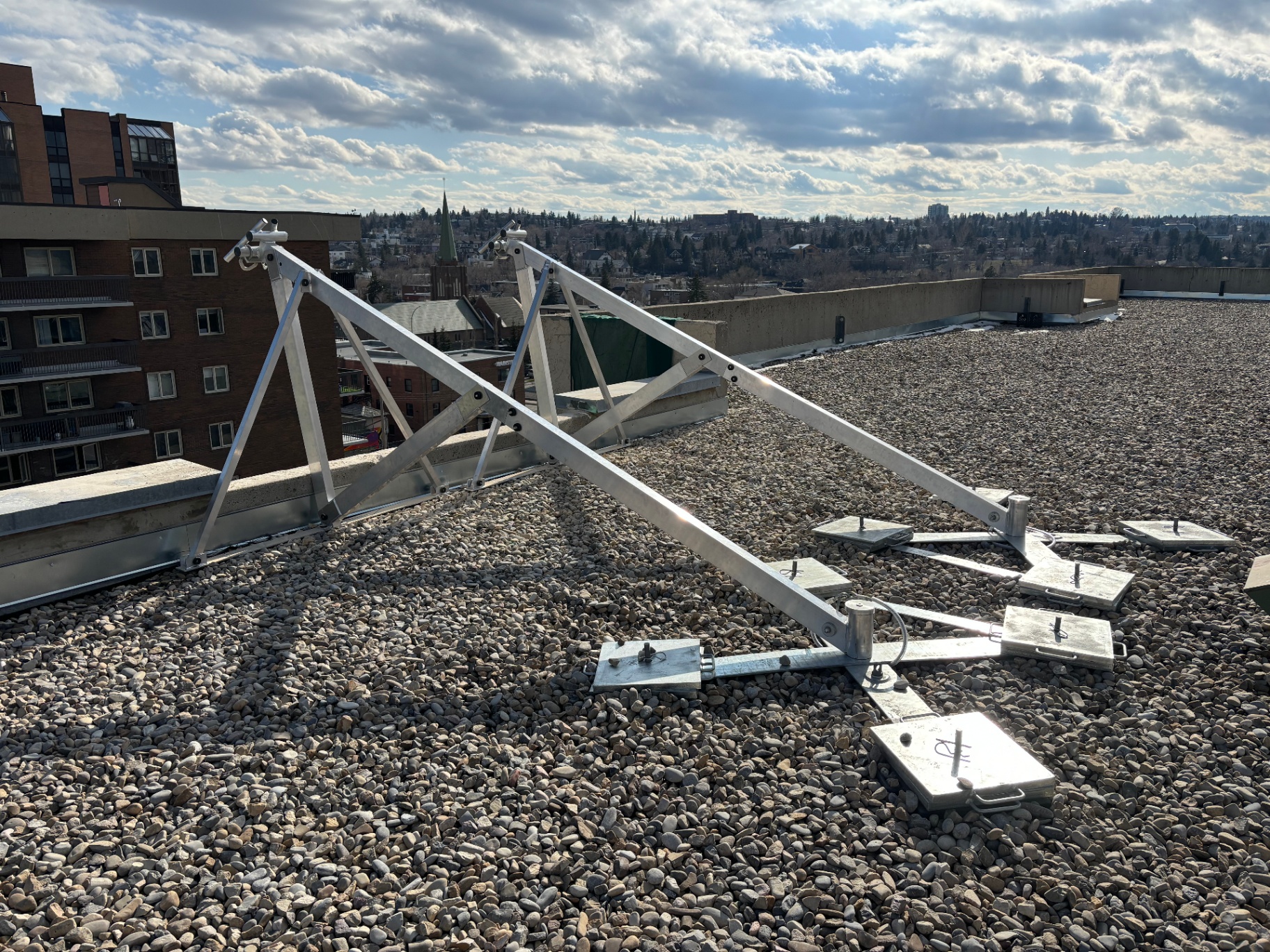
Ballasted anchors for building repair - no roof penetrations.
Free-standing, counterweighted anchor frames give certified crews safe tie-off points without drilling the roof membrane - used by AIM to stage rope-access drops for facade work and window cleaning on buildings where penetrating anchors aren't an option.
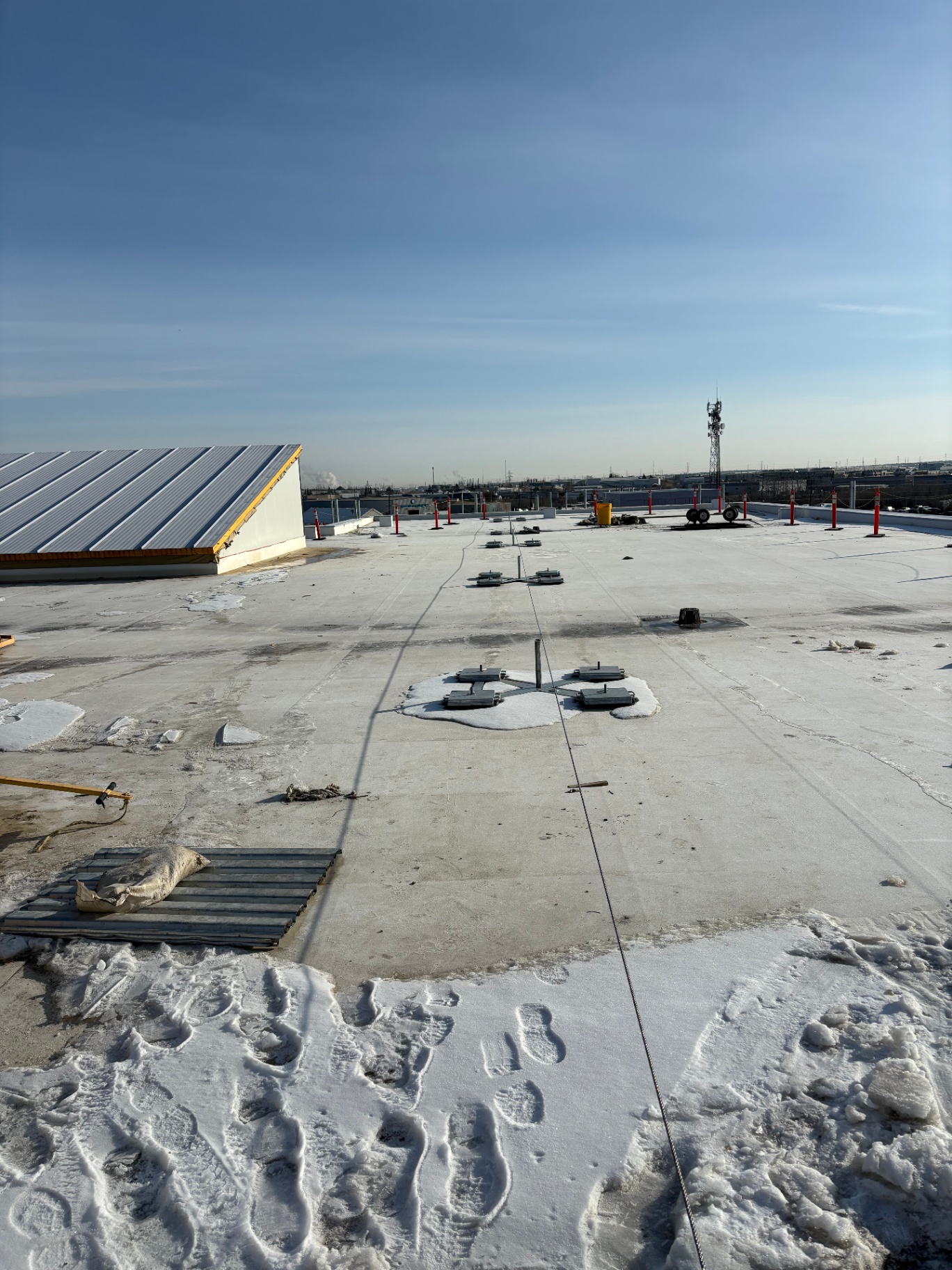
Horizontal lifeline layout and system design without roof penetrations.
Counterweighted anchors and cable runs are positioned to suit roof geometry, work zones, and required tie-off paths - giving crews a complete engineered horizontal lifeline system while keeping the membrane intact.
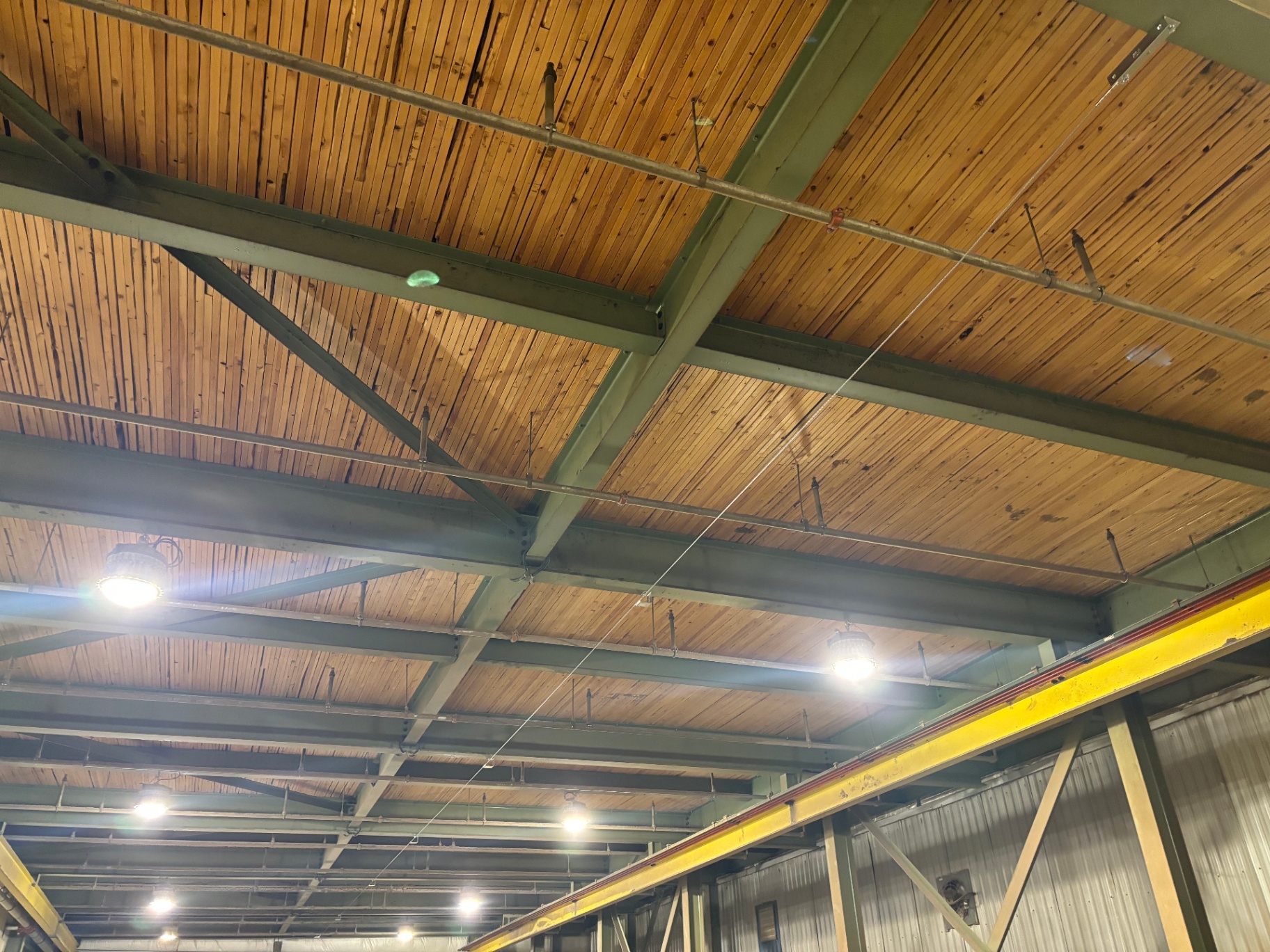
Overhead lifelines, installed from rope.
Cable runs anchored beam-to-beam across a live industrial space - rigged, tensioned, and terminated by rope access crews without scaffold, lift, or shutdown of the floor below.
Beam-to-beam, hands-free of the floor.
Working off twin ropes off the structure above, the crew sets each intermediate anchor and pulls cable across the bay - no interruption to the operation underneath.
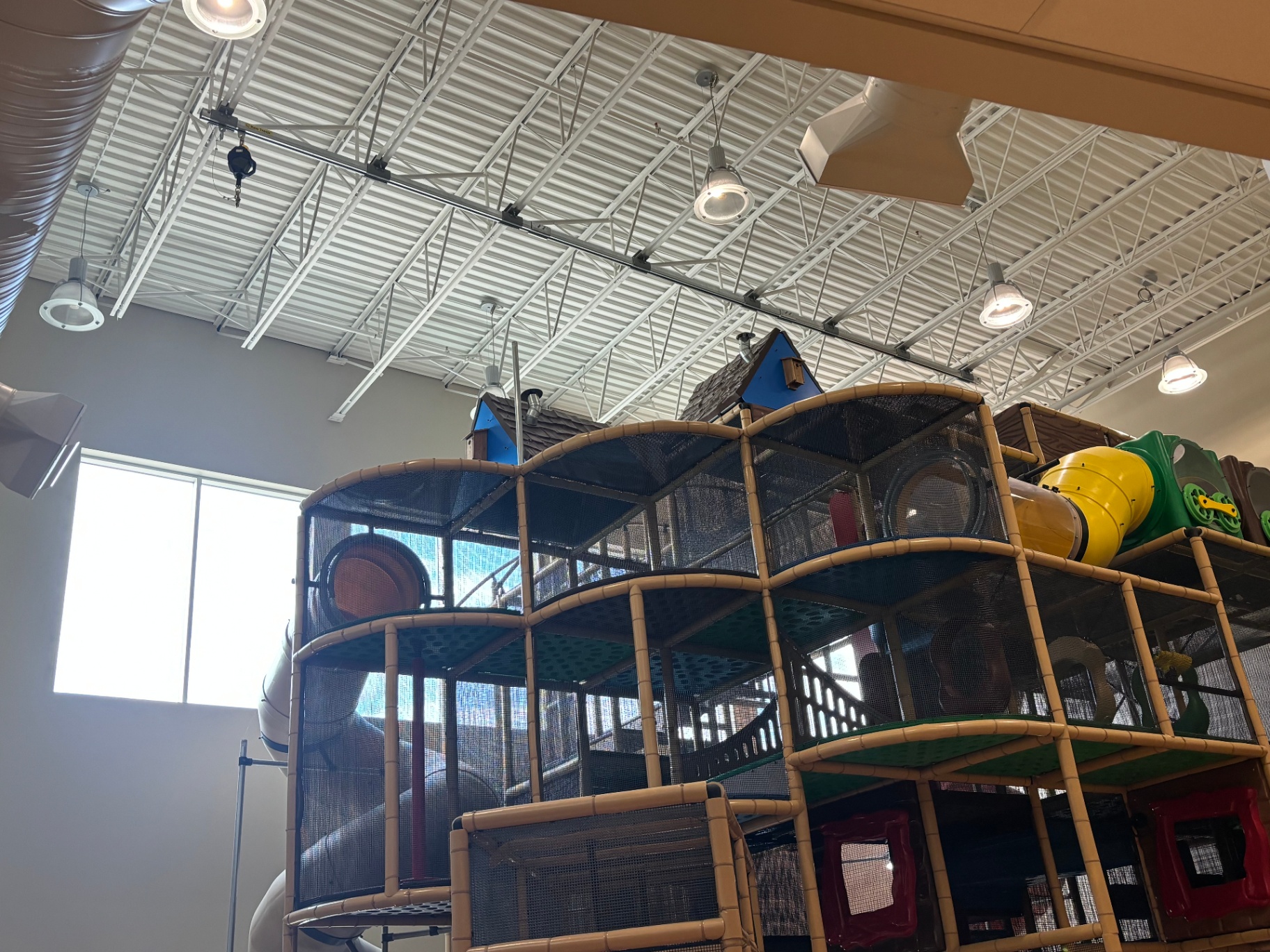
Rigid track systems engineered around the work below.
Curved and straight rigid-track runs let workers reach every corner of a structure with a self-retracting lifeline overhead - clean tie-off, full coverage, and no obstruction to the operation underneath.
One thing in common: work at height that has to get done.
Whether you're looking after the building or running the job site, we match the right access method - lift, rope, roof, or anchor - and get crews safely to the work.
I manage a building
You're a property manager, condo board, or building owner. You need fall protection installed, inspected, and certified - and access work done safely and quietly, without burning the budget or upsetting tenants.
- Roof anchor installation and recertification
- Guardrail installation
- Fall protection design, installation, and annual inspection
- Equipment inspection
- Bird netting installation and repair
I'm a general contractor
You're running a construction or restoration project. You need height access - lift, rope, or anchor-based - without waiting on a full scaffold build.
- Certified boom lift operators
- Rope access for difficult-access work
- Anchor, guardrail, and lifeline installation
- Equipment inspection
- Coordinated work across trades
Send us the brief. We'll handle the access.
Share the site details below, address, scope, and how the work currently gets accessed. We'll reply with next steps or book a visit.